


Netherlands · home turf
Best Kept Secret
52%
of cars arrive with a passenger. At Springtij Forum it is 72%, with 2.6 people per car.
Home market
Slinger Carpool Monitor '26
Fans have stopped treating the trip as logistics.
In an age of screens and algorithms, people crave real life: not another feed, but an experience they share with others. And that experience no longer waits for the doors to open. It starts the moment the car door closes.
It started in the Netherlands and is now spilling over into Belgium, Germany and the UK. Based on four seasons of shared rides to festivals, concerts, stadiums and sports events, this monitor maps a movement: strangers turning into companions, and transport turning into anticipation.
This isn't a transport trend. It's a cultural shift in how fans get to the moments that matter.

Every festival already has its own transport network. It just isn't connected yet.
Fan travel is the biggest climate footprint in live entertainment. REVERB's Concert Travel Study found 80% of concertgoers drive, and that fan travel emits 38 times more than artists, crew and gear combined. Most of those cars have room.
Those empty seats roll onto the site anyway. They cost the organiser nothing and add no emissions. A shared ride puts no extra vehicle on the road. A shuttle bus does, and emits around five times more per kilometre than a car.
Empty seats first, shuttle second. A full bus from a station or park-and-ride stays the perfect complement. Shared cars cover the routes a bus can't.
A 50,000-visitor festival
Taken seats 32,500 Empty seats 32,500
1%
of those empty seats filled means 325 more people sharing, and six coaches you don't need to hire.
44 kg
CO₂ saved per passenger who would otherwise drive alone, on an average ride of 227 km.
6–21
passengers a shuttle bus needs before it saves any CO₂ at all, depending on empty legs.
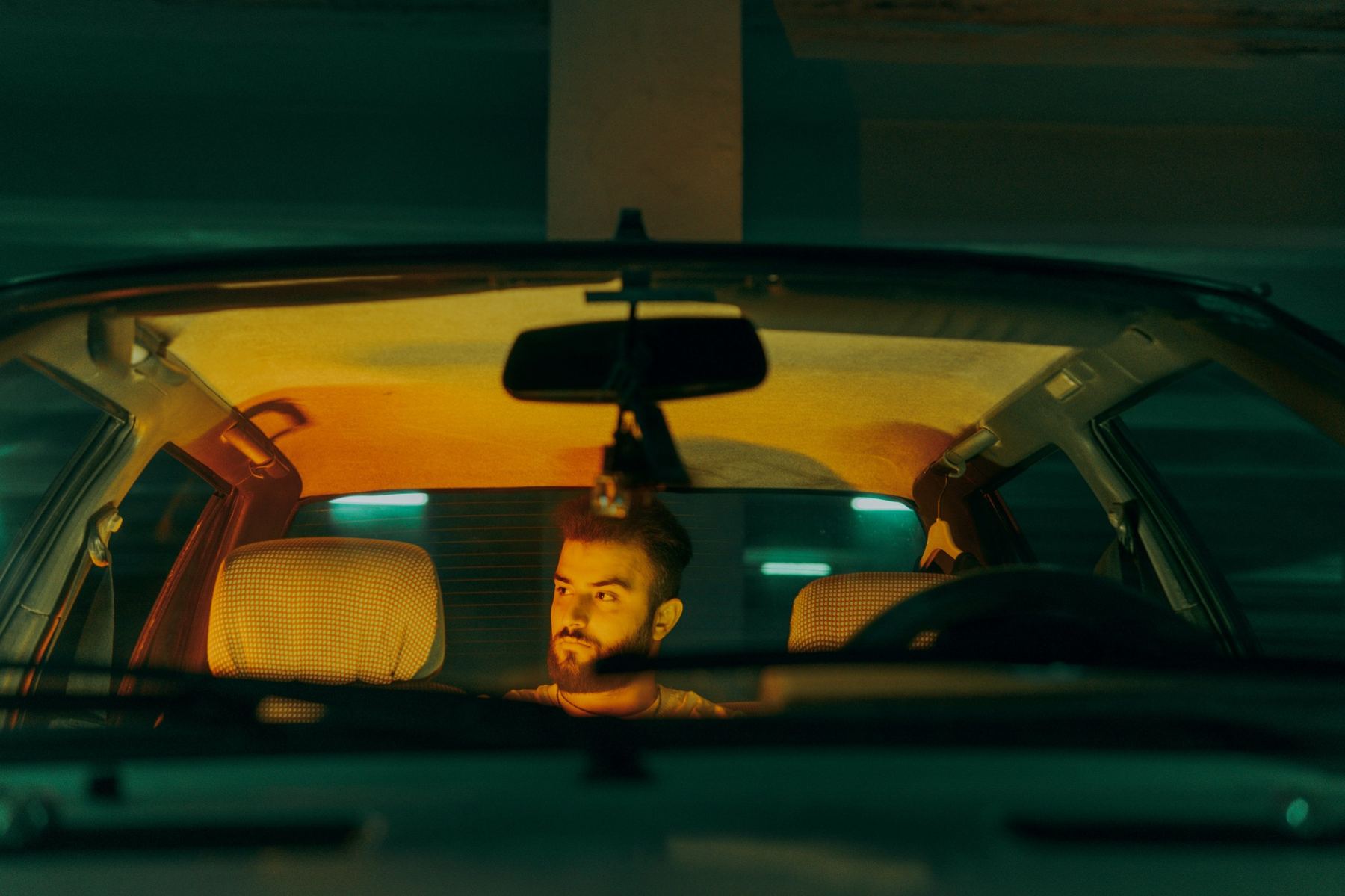
In 2024, fans travelled more than 40 billion miles for live music, according to Live Nation. They cross borders, languages and time zones to be there.
On Slinger we see where those miles start. Rides to Glücksgefühle in Hockenheim were offered from Berlin, Hamburg and Salzburg. Tomorrowland riders came 408 km on average. The further the trip, the more natural it becomes to share it.
84% of fans say live music unites across borders. In a shared car, that starts before the gates open.
1,181 km average shared ride to Boom Festival in Portugal. More than half of those cars had a passenger.
Netherlands · home turf
52%
of cars arrive with a passenger. At Springtij Forum it is 72%, with 2.6 people per car.
Home market
Belgium
408 km
average trip in 2025, across 211 shared rides. Also Pukkelpop and Alcatraz.
Second market
Germany · season one
361 km
average trip, with 142 rides in the very first season.
Live since 2026
United Kingdom · season one
57%
of cars with a passenger in the first season. 19 of 20 reviews gave five stars.
Live since 2026
8¢ per kilometre for a seat in a shared car
Tickets get more expensive every year, and so does fuel. Fans keep going anyway, and they make room in the budget by sharing the road.
Drivers set their own price per seat. Across hundreds of rides it lands in the same place in every country: 7 to 10 cents per kilometre, about €16 a ride. Nobody makes money on it. Everybody travels cheaper.
What a trip costs
Big figures: average price per seat set by drivers, per trip. Bars: price per km compared with driving alone. Fuel: €2.692 per litre (record Dutch price, Sept 2026), 1 litre per 15 km.

Live Nation finds that 93% of fans crave real experiences over digital ones. That hunger doesn't wait for the first song.
People who share a ride rarely write to us about CO₂. They write about the conversation, the playlist, the anticipation and the drink after the show. The ride has become the pre-show: connection in motion.
And the tighter the community, the fuller the car. At events with 15 or more rides on offer, 39% of cars get a passenger. At events with fewer than three, it is 11%. Like-minded people find each other.
9/10 reviews give the shared ride five stars
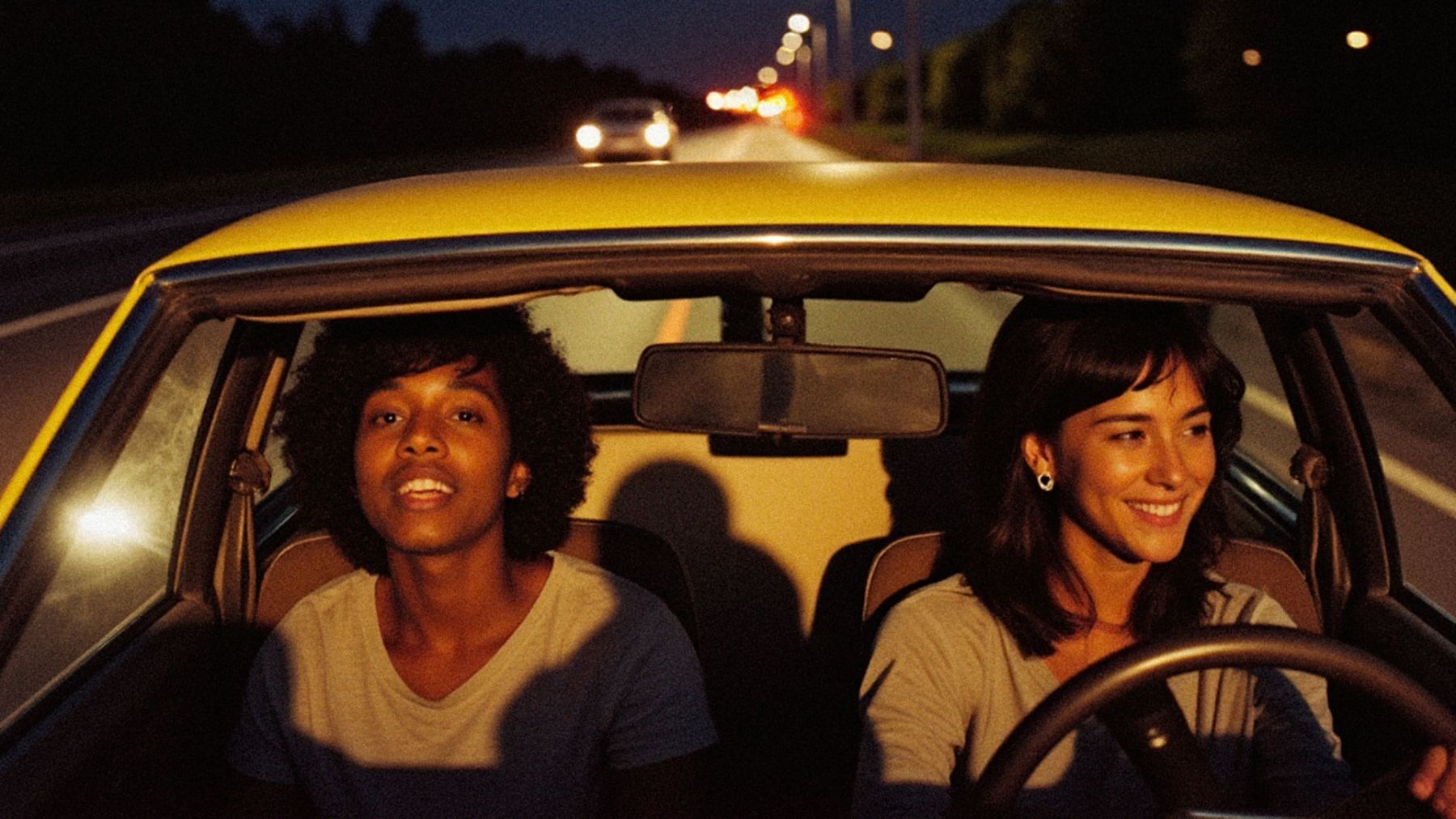
The movement is ready. It only needs a signal, and that signal comes from the organiser.
The travel decision is made when the ticket is bought, not the night before. Festivals that sent ticket buyers one email with the Slinger link saw rides multiply. At ArcTanGent, 57% of cars then arrived with a passenger. Glücksgefühle did the same in its very first season and got 142 rides straight away. At the Solheim Cup, a single push notification produced 145 rides within a few hours.
That is where organisers belong: at the moment fans decide how they'll get there.
Shared rides per visitor, indexed
+68%
More seats filled, season on season.
Among our eight largest partners, filled seats rose 68% from 2024 to 2025. More people offered rides, and just as many found a match.
The shift
Fans are choosing real experiences. They travel further than ever to be part of culture. They crave connection in an age of screens. And they are ready to move in ways that feel meaningful.
Sharing the ride sits right at the centre of that shift. It turns strangers into companions and transport into anticipation. It is social, it is affordable and it leaves the road a little emptier.
The road to the show is part of the show.

The running total
The same counters every Slinger organiser sees, for the whole platform.
Savedkg CO₂
203,247 kg four seasons
Savedkm
1,053,094 km 26× around the world
For your own deck
The road to the show is part of the show.
Shared rides turn strangers into companions and transport into anticipation.
The empty seats are already driving onto your site.
A shared ride puts no extra vehicle on the road. A shuttle bus does.
Carpooling is not infrastructure. It is one email.
| Data point | Source |
|---|---|
| A shared ride gets 4.7 out of 5 on average; nine in ten reviews give five stars | Slinger Carpool Monitor 2026 |
| A seat in a shared car to an event costs about €0.08 per km, roughly €16 a ride, in NL, BE, DE and the UK | Slinger Carpool Monitor 2026 |
| Festivals that email ticket buyers get up to 16 times more shared rides per visitor | Slinger Carpool Monitor 2026 |
| Filled seats among Slinger's eight largest partners rose 68% from 2024 to 2025 | Slinger Carpool Monitor 2026 |
| A 50,000-visitor festival has about 32,500 empty car seats on the way, equal to 650 coaches | Slinger Carpool Monitor 2026, based on KdG and REVERB |
| A shuttle bus needs 6 to 21 passengers before it saves any CO₂ | Slinger Carpool Monitor 2026, based on CO2emissiefactoren.nl |
| 80% of concertgoers drive; fan travel emits 38x more than artists and crew | REVERB Concert Travel Study (North America) |
| 93% of fans crave real experiences; three in four say the trip makes the show more meaningful | Live Nation, Living for Live (2025) |
About the data
This monitor is not a survey. Every number comes from real rides on the Slinger platform: where people came from, how far they drove and how many sat in the car. As of 9 November 2026. No personal data used; reviews are anonymised.

Join us. The ride has just begun.
Let's find out together. Most organisers are live within a day.
Slinger helps organisations let their community ride together: festivals, venues, sports events and employers in the Netherlands, Belgium, Germany and the UK.